

The Young Genetic Stroke Alliance: A Natural History with Biomarkers of Hereditary Cerebrovascular Disorders
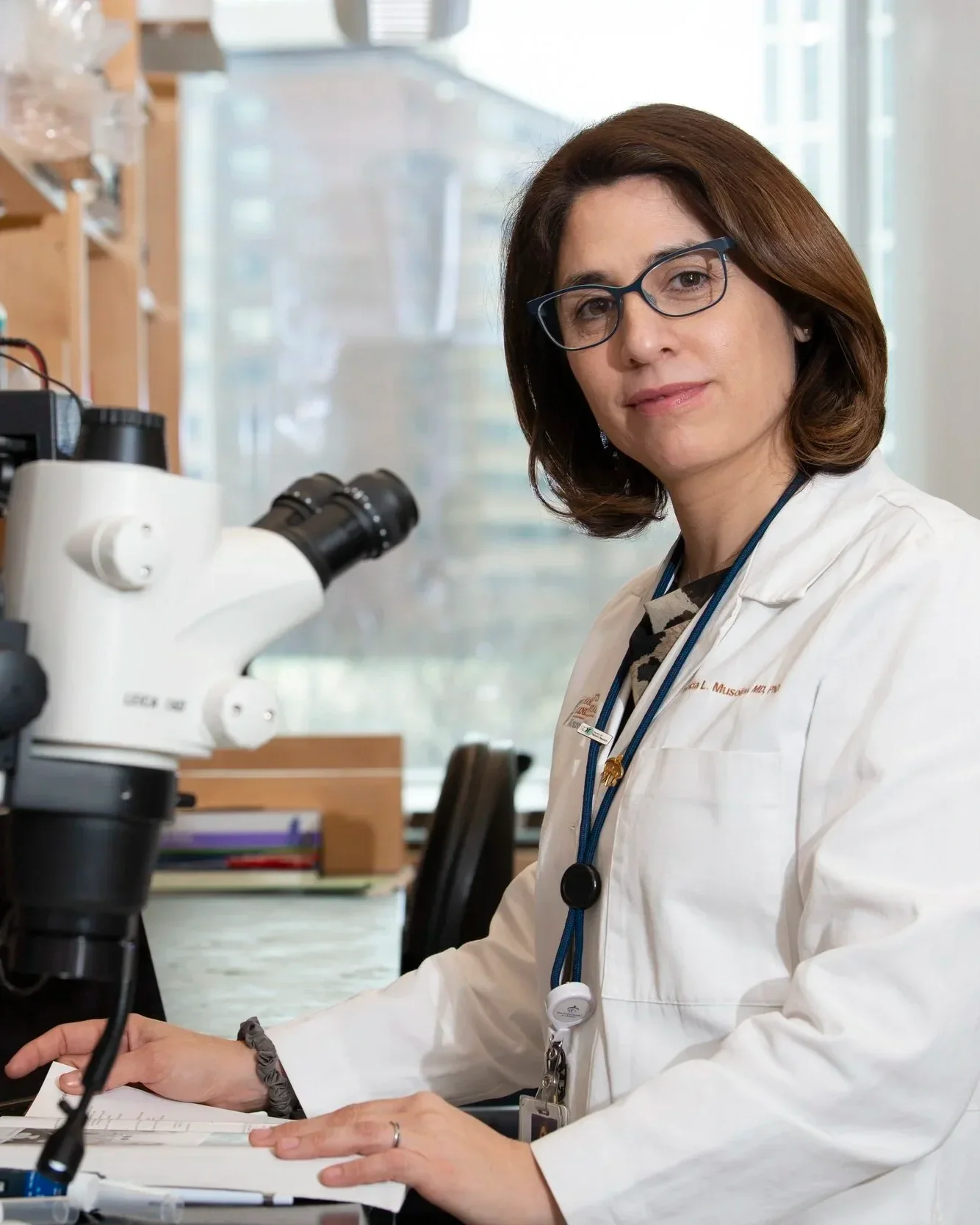
Dr. Musolino and Dr. Gould are working in parallel on developing gene therapies to help patients with COL4A1 and COL4A2 variants.* As part of the Young Genetic Stroke Alliance efforts, this ongoing study at MGH follows patients with Gould Syndrome to learn how the condition changes over time, what to measure, and who may benefit from future treatments.
This study will play a crucial role in clinical trial readiness by establishing clinical biomarkers that may serve as future clinical trial endpoints.
at a glance
Who can join: anyone with a confirmed COL4A1 or COL4A2 variant (including VUS) in the US or internationally
Where: Remotely from anywhere, or in person at Massachusetts General Hospital (MGH) in Boston, Massachusetts, USA
What's involved:
Sharing medical records and prior imaging
(optional) blood and skin samples at MGH
Follow-up: yearly or sooner, depending on the person
Cost: none
You're welcome to join this study even if you're already in the UCSF study.
*Please note that participation in the natural history study will not impact your medical care. If you are interested in scheduling a clinical appointment (second opinion) at MGH, please ask the research coordinator or contact your PCP for a referral.
webinars
frequently asked questions
-
This study uses both retrospective (looking back at prior health history) and prospective (monitoring changes over time) data.
-
Participants will provide consent for their medical records to be shared with the research team.
Blood and skin samples are optional and, at this time, only collected at MGH.
-
Your medical records and biological samples contribute to:
Understanding disease mechanisms at a genetic and cellular level.
Identifying biomarkers for disease severity and progression.
Evaluating potential therapeutic approaches.
Refining diagnostic criteria and clinical guidelines.
-
Once submitted, your records are securely stored in our research database. Data is accessible only to our research team working on this study and their collaborators. Data is analyzed in aggregate form to:
Recognize patterns in disease progression
Identify potential treatment targets
Support clinical guideline development
Contribute to future therapeutic trials
-
Patient de-identified data is shared securely with:
Clinicians and researchers working to advance COL4A1/A2 research
Global research networks collaborating on similar genetic conditions
Publications and medical guidelines (de-identified data) to inform best practices
Data will never be sold or used for purposes unrelated to medical research.
-
Follow-up frequency depends on study design and disease progression. Some participants may have annual check-ins, while others may be contacted more frequently depending on emerging findings or clinical need. (will clinical need impact their natural history participation?)
-
The MGH team aims for transparency but must ensure data integrity and privacy. Typically, preliminary findings are shared within 3-4 years, with major research conclusions published as they become available.